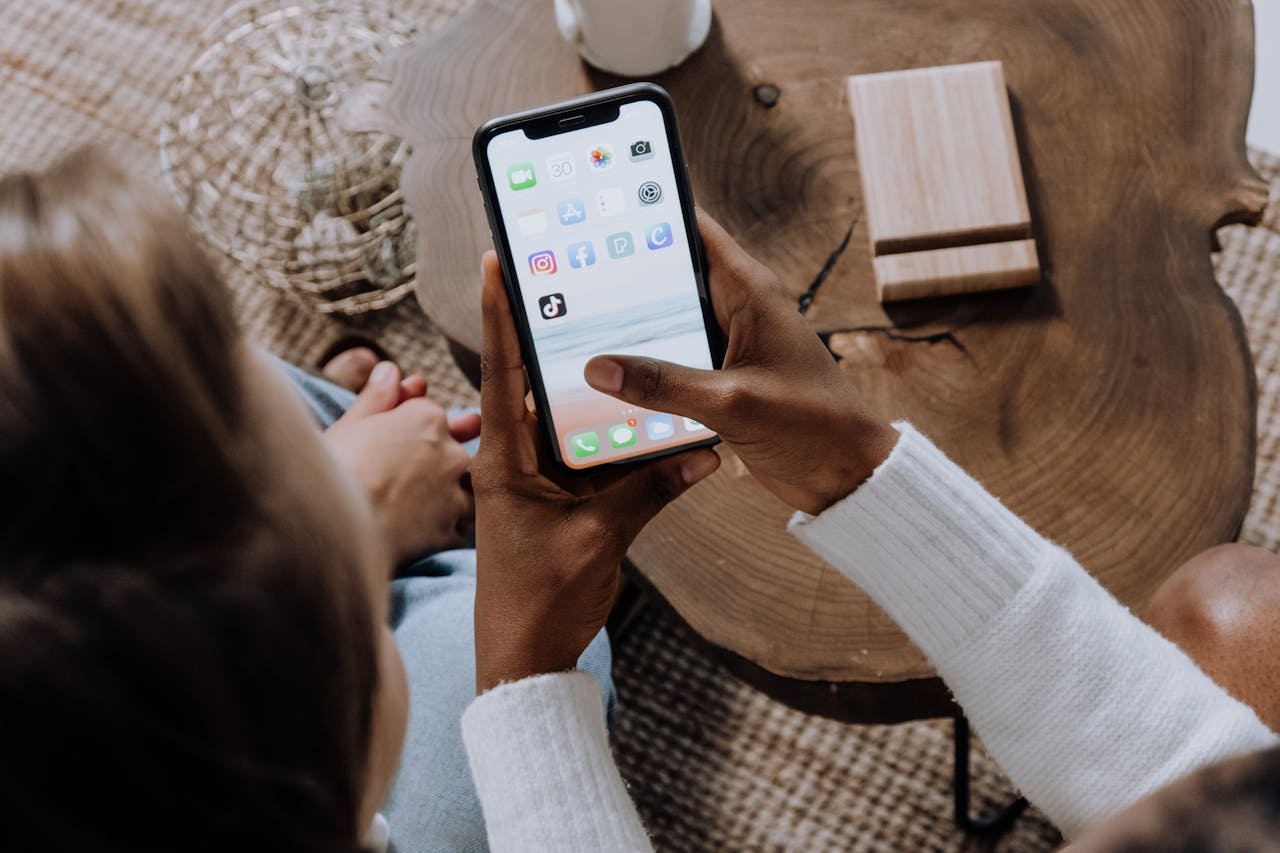
It’s Sunday evening. You’re on the couch, phone in hand, scrolling. You’ve been here for an hour, maybe two. And it’s not the first time today you reach for your phone, thinking “just a 5-minute break,” only to sink into doomscrolling. The result? You feel you wasted your time again.
Your mind is racing: “I should be learning something,” “I could be working on that project.” That voice in your head keeps listing things you planned to do this weekend but didn’t touch: starting the online course you bought six months ago, reading a book that’s been collecting dust on your table for weeks (or at least one article from the dozens of open tabs in your browser)… The list is long, and you feel utterly exhausted. At the same time, a second voice whispers, “I’m too tired to do anything else,” but the guilt is already there.
I know this scene intimately. During my PhD, I perfected the art of exhausted scrolling. I mastered the awful skill of guilt-inducing self-talk more than any other skill. I couldn’t rest because I knew there was always something to do. It took me some time, and a burnout… to understand that I’m not broken.
If your brain won’t let you rest, it’s not a personal failing. It’s something we’re all “equipped with”, and it has a name: Inner Critic.
Face Your Inner Critic
Yes! We all know it and have it in our heads.
It’s the voice narrating your life like a performance review – an unyielding guardian of productivity that unapologetically points out every unchecked item on your never-ending to-do list, expecting Olympic-level performance.
The paradox is that the Inner Critic means well. It wants you to succeed. But it’s also slowly killing your ability to rest.
If you are a creative person and your work is very intellectually demanding – like for artists, content creators, and entrepreneurs – you have it worse. Why? Because there’s no clock-out when your brain is the product. You often can’t just leave the work, close your laptop, and disconnect until 9 am the next day. The thinking and problem-solving process doesn’t shut down, making rest incredibly difficult.
There is also another trap: being a creative and productive person becomes your identity. This is why, when you are not creating, learning, or improving, you feel guilt and become increasingly disappointed with yourself.
The World That Won’t Let You Rest
I charged the Inner Critic with the responsibility for our inability to rest, but it’s not the only one to blame. After all, every creative genius from Leonardo da Vinci to Virginia Woolf had an Inner Critic but still was able to live a more or less balanced life.
Well, the difference is, they didn’t live in the times of racing capitalism and the brutal economy of attention when every day the different media’s algorithms battle over your attention, trying to make you scroll longer and longer, and suck you into the black hole of AI-generated funny animal videos.
We are torn between the “productivity imperative” — that internalized belief that every moment must have measurable output to make our life valuable, a true flagship of hustle culture — and a world specifically designed to capture and monetize our attention.
This is why it’s so hard to make space for both calm productivity and deep, valuable rest. A stressed mind under pressure is much more prone to resort to the well-known coping mechanism: reaching for your phone or mindlessly opening Netflix and clicking “Play next episode.”

Why Traditional “Rest” Fails Creatives
Fortunately, we are aware of these pitfalls, and we keep trying to find some rest. Yet we fail in three predictable ways:
Passive Consumption Trap
Scrolling Instagram or TikTok, or watching three episodes of a new Netflix series, might feel like rest in the moment. But most of the time, it leaves you more depleted, feeling even more tired than when you started. This isn’t just an innocent habit but a real modern mental drain with tangible effects.
I’m not entirely against it, but it’s so easy to lose track of time and “wake up” four hours later, only to enter the guilt spiral once again.
Productive Rest Trap
This one is “my favorite,” and I’m sure you do this too!
You listen to podcasts while cooking, audiobooks while walking, and watch tutorials on a treadmill. Your brain is never truly off; it never fully disengages.
Rest becomes another form of time optimization. You replace the exhaustion of scrolling with the exhaustion of constant learning. Except that it’s even worse because “productive rest” is an oxymoron.
Science proves it’s a myth, just like multitasking. Your brain can only truly engage with one activity at a time; if you’re genuinely into a podcast or tutorial, you’re in learning mode, not resting.
“I’m Going to Meditate” Trap
This one may surprise you, as it’s not as apparent as the two previous traps. Yet, I know many of us have fallen into this one, especially as beginner meditators.
We now know how beneficial meditation is for the mind and body. Even 10 minutes a day may do wonders, and if we keep practicing, the compound effect is just incredible.
We need only to make space for it, remain still, and let go of expectations… Oh gosh, it already sounds like another chore on the list. How many times have you put meditation on your “to-do” list because you know “you should be doing it for your health”?
It’s funny how much resistance can be provoked by something as simple as taking a couple of minutes to meditate. However, even if you overcome it and begin, the challenge persists.
“Sit still and think of nothing” seems impossible when thoughts keep popping up in your head. You try, but it becomes another self-improvement task, or worse, another thing you’re failing at. The pressure to “do it right” and the inability to concentrate involuntarily induce you to experience performance anxiety, so you almost dread another meditation session.
I struggled with it many times before diving deeper into neuroscience and completing my MBSR (Mindfulness-Based Stress Reduction) training, which gave me a better understanding of the meditation process. It also taught me that there is no such thing as perfect meditation.
There are three “methods,” and none of them is rest. They’re just different flavors of busy.
The Neuroscience of Why Rest Feels Impossible
If you want to find the root of the problem, you need to look at what neuroscience says about rest.
To rest properly, we need to activate the Default Mode Network (DMN), which naturally occurs when the brain isn’t focused on the outside world – when you let your mind wander, daydream, or simply do nothing.
Researchers are alarmed that, in an era of readily accessible social media in our pockets (which provides new distractions at the touch of a button), we no longer have the opportunity to be bored. And boredom – the true one, when you have nothing to do, not the feeling of being bored with endless scrolling – is good for us! It confronts us with emotions, fears, and life choices, giving us space to reflect. This forces the brain to wander, gently stimulating it and sparking creativity.
That’s the key to real productivity: putting your brain in the Default Mode Network as often as you can to easily enter your creative flow when you get back to work.
What We Lose When We Can’t Rest
So, when you successfully prevent your brain from resting with mindless scrolling or fill every gap by multitasking at any moment of the day, you deprive yourself of the mental space essential for any creative individual.
Scrolling drains your energy, and constant productivity kills creative output. You end up being physically present but mentally absent. You are unable to enjoy simple pleasures. You try to optimize your life, but increasingly feel like you’re missing out. Your productivity plan derails, and chronic stress becomes a constant companion, often before you even realize it.
I vividly remember the long months after obtaining my PhD, when I lost all passion for research and writing because I was so focused on work and unable to rest during the period leading up to the defense.
What saved me was my still unbothered love for art history and teaching it to others—showing students how to look at art, truly see what it has to offer us, beyond mere study. It was when I gave myself permission to slow down and to stop treating art primarily as an object of study that I rediscovered its power to regulate the nervous system and enhance creativity.
Why Art Works Where Other Methods Fail
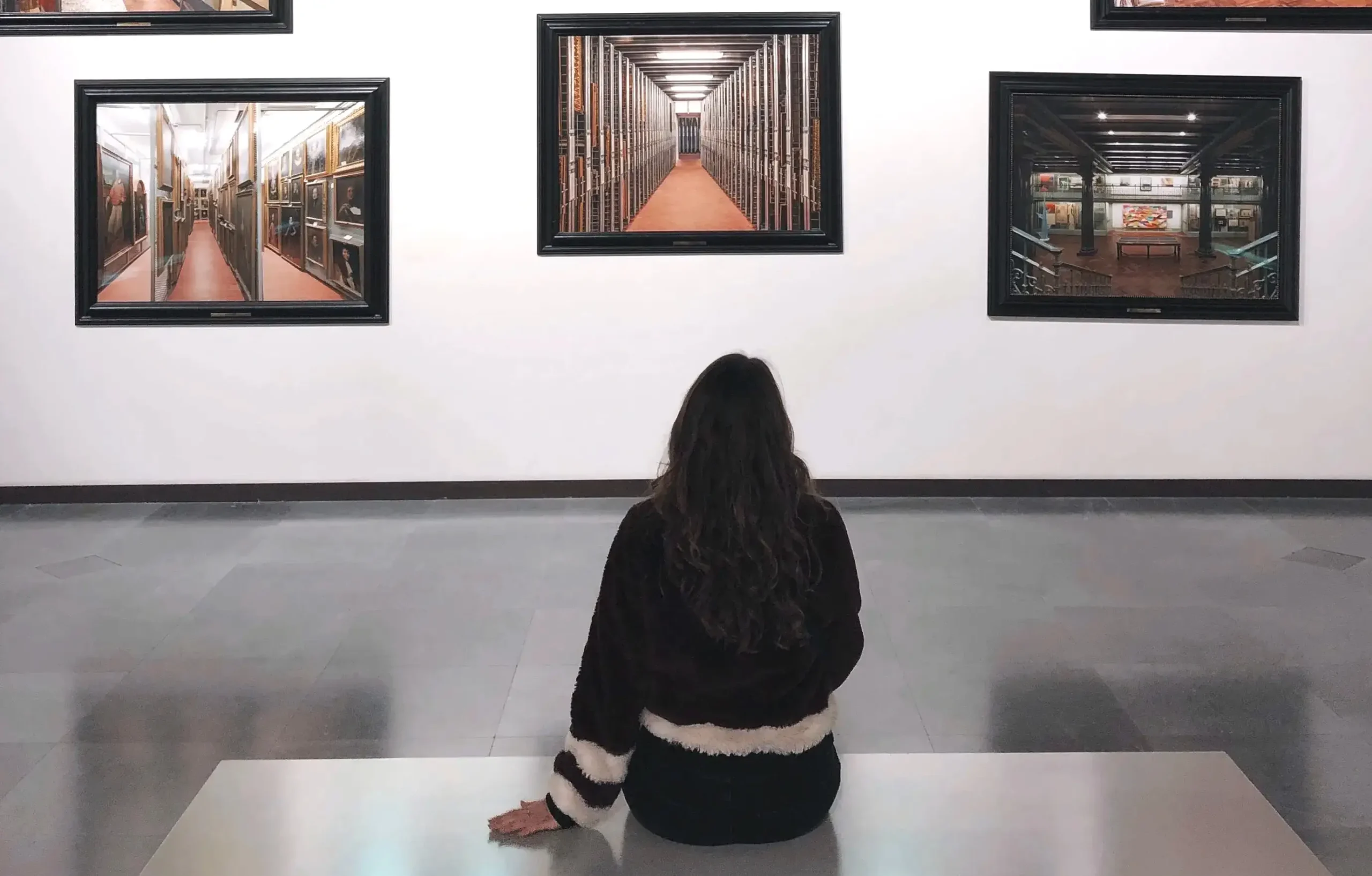
We can call it mindful art engagement or simply looking at art with purpose, but what matters is the benefits it brings to the brain and well-being.
Even microdoses of engaging with art can make a massive impact on your capacity to rest and focus easily once you are back to work.
And I’m not talking about art-making (which is also great but can be intimidating, especially if you struggle with perfectionism, which often comes in a pack with the Inner Critic). I’m talking about engaging with a painting, sculpture, or any work of art, whether experienced physically or virtually through a reproduction. Why is that?
Looking at art gives your productivity-obsessed mind something to do. Yet it’s not work – no optimization, no conventional learning. It’s something else entirely.
1. It’s Restful Without Being Passive
You’re looking at something. Your brain is active, but not anxious. Your mind engages, but differently.
The stimulation is soft, gentle, and you have control over your attention. Crazy-paced short videos and soulless algorithms do not hijack it.
There’s no “correct” way to see.
Your productive mind is satisfied: “We’re doing something.” But you’re actually resting, enjoying what you see.
2. It Satisfies the Intellectual Need
Context emerges naturally. You begin to discover new things, new details. You notice colors and structures. Curiosity is engaged, not demanded. Your senses are gently awakened, signaling to your brain that a safe environment exists, allowing it to relax.
It feeds your intellectual side without exhausting it or imposing unnecessary pressure. You explore different worlds and learn something new, but it doesn’t even feel like learning.
3. It Anchors Your Wandering Mind
As I said before, our minds need boredom and a space to wander in order to rest. But paradoxically, what makes traditional meditation so hard is… the wandering mind, the thoughts passing through your head one after another with the speed of light.
When you focus your attention on the painting, you anchor it. The artwork is always there when your mind drifts. Unlike “eyes-closed” meditation, art gives you something beautiful to return to and to ground yourself in.
There’s a whole branch of studies called neuroaesthetics that examines the impact of aesthetic experience on the brain, and we now know that the benefits are countless. Mindful art encounters can prevent many diseases and help heal them. It can also calm the nervous system and improve day-to-day well-being. So, I encourage you to try to see for yourself what art can do for you.
The Art Wanderer Lab Method: Meditate Through Art, Discover Art Through Meditation
When I first tried meditating with an artwork, I experienced a thrill I had not felt in a long time. I immediately found the perfect balance between relaxation and intellectual stimulation. It was so satisfying that my Inner Critic finally silenced for a moment and probably entered contemplation mode too.
This is how it works. It’s simple:
10 minutes with a chosen painting — Just looking. Breathing. Noticing. Being in the present moment.
I call it art meditation.
You can try it, stop here, and enjoy the relaxed state.
But if you still feel the itch of curiosity and want to go deeper, you can explore the painting further with a short, in-depth video: a 6-minute introduction to its context (who made it, why, and what style it represents).
That’s all. No homework feeling, guilt-free engagement. An experience that enriches without exhausting.
That’s it. Meditate through art. Discover art through meditation.
Starting Your Art Rest Practice
If you want to try this, here’s what I suggest:
Pick your moment. Not “optimal time”, YOUR time. It could be in the morning to set up a creative mood for the day, during your lunch break if you need a gentle reset, or in the evening, before the scroll begins.
You need only 10-15 minutes.
Give yourself permission. This is important. Don’t think of this as just another productivity hack. This isn’t “rest” your productivity-obsessed Inner Critic will reluctantly accept, nor is it merely a more effective substitute for traditional meditation you struggle with.
What does it actually look like?
- Take a few deep breaths.
- Look at the artwork. I recommend one of Caspar David Friedrich’s stunning works, or just a piece of art you really like.
- When your mind wanders (and it will!), come back to the painting. Focus on a detail. Notice the color, the light, the techniques of expression.
- By the end of your session, tune into your body and take a moment to acknowledge how you feel.
Doing this exercise for the first time might feel somewhat strange. You may feel awkward or hear the whisper of your productive mind protesting: “This is pointless.” That voice becomes quieter, and relaxation fills your body with each minute spent mindfully engaging with the artwork.
Picture this: It’s Sunday evening. You’re on the couch. But this time, you’re looking at Friedrich’s Wanderer above the Sea of Fog and feel rested, refreshed, and inspired.
Keep in mind that rest isn’t the opposite of productivity. It’s the foundation of sustainable creativity and growth. Mindful art engagement bridges the gap because our mind needs beauty and an inspiring place to wander and refuel.
Ready to experience rest without guilt? Download the Essential Art Wanderer’s Kit and try your first guided meditation with a masterpiece, completely free.
Sources & Further Reading
Satici, S.A., Gocet Tekin, E., Deniz, M.E. et al. Doomscrolling Scale: its Association with Personality Traits, Psychological Distress, Social Media Use, and Wellbeing. Applied Research Quality Life 18, 833–847 (2023). doi.org/10.1007/s11482-022-10110-7
Rajeshwari S, Meenakshi S. The age of doom scrolling – Social media’s attractive addiction. Journal of Education and Health Promotion, 1, Medknow, Jan. 2023. doi:10.4103/jehp.jehp_838_22
Sharpe B, Spooner R. Dopamine-scrolling: a modern public health challenge requiring urgent attention. Perspectives in Public Health. 2025;145(4):190-191. doi:10.1177/17579139251331914
Luchini, S. A., Volle, E., & Beaty, R. E. (2025). The role of the default mode network in creativity. Current Opinion in Behavioral Sciences, 65, Article 101551. doi.org/10.1016/j.cobeha.2025.101551
Elpidorou, A. The bored mind is a guiding mind: toward a regulatory theory of boredom. Phenom Cogn Sci 17, 455–484 (2018). doi.org/10.1007/s11097-017-9515-1